Saturday, December 7, 2024

I Ain't 'fraid o' No Snakes!

As I was watching Andrew Callahan's new documentary "West Virginia Snake Church", my first impression was one of bemusement. Typically the litmus test for good theology is one of consensus. Year one bible students are taught in their hermeneutics classes that passages in the bible are interpreted against the grander narrative of scripture, which has also been well documented by theological consensus over the centuries. Oftentimes, Christian cults like The Church of Jesus Christ of Latter Day Saints, will develop theology off of hard-to-interpret passages, or simply fabricate them, like the practice of Sealment (see Doctrine and Covenants 132:19). Despite being contradicted by Jesus directly in Matthew 22:23-33, the grander narrative of the New Testament, with the Kingdom of Heaven and the new reality of life after he returns and puts all things right, describes a radically different conception of what "Heaven" is. So, when I watch a documentary about a church than handles venomous snakes, drinks poison, and uses scripture to justify it, my eyebrow is raised to new heights. 


 The passage in question that "justifies" snake handling is Mark 16:15-18 which reads:

[15] And he said to them, “Go into all the world and proclaim the gospel to the whole creation. [16] Whoever believes and is baptized will be saved, but whoever does not believe will be condemned. [17] And these signs will accompany those who believe: in my name they will cast out demons; they will speak in new tongues; [18] they will pick up serpents with their hands; and if they drink any deadly poison, it will not hurt them; they will lay their hands on the sick, and they will recover.” (ESV)

This is a part of the larger ending to Mark that appears to have been added at a later date, likely as a way to help tie up the ending and make it less abrupt. Did Jesus say explicitly that those who believe will be impervious to poison and snake venom? Perhaps. Is it more likely that this is symbolic language used to describe the greater transformation in the hearts of believers? I think so. And even if it was the former, there seems to be a greater concentration of miraculous things occurring in the early days of the church.  Without getting too in the weeds with eschatology and spiritual gifts, suffice to say, the grander narrative of the New Testament actually elevates unremarkable actions, like hospitality, forgiveness, worship, and service, to a much higher regard than healing, speaking in tongues, or prophecy. Therefore, we shouldn't tailor theology, or even denominations, to cater to things that ultimately come from God to minister to a specific time and context. 

That said, I was watching a documentary about snake handling Christians, endangering themselves and others with bad exegesis, and seeing in them the fruit of the Holy Spirit. What? 

What's going on here? 

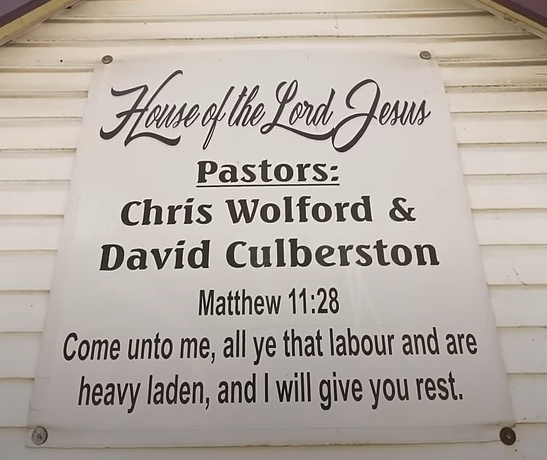
This situation made me think of Paul's words in Philippians 1:21. "For to me to live is Christ, and to die is gain" is often quoted to justify those who martyr themselves for the faith. (I can only imagine that this verse is thrown around a lot in The House of the Lord Jesus church in Squire, West Virginia.) But the immediate context of the verse is in regards to Paul's on-going work of Evangelism and subsequent imprisonment. He also qualifies the statement with thought that, while it would be better to die and to be with his Lord Jesus, he has a duty to shepherd and train leaders in the early church and lead by example. How can you do that while drinking poison and handling snakes? Yes, Paul also was bitten by a Snake in Acts 28, but Paul's mission was not yet finished. God would have him preach the Gospel to Rome first and then die a martyr's death. These abilities, if temporarily granted, were for the specific purpose of evangelism.  

Andrew Callahan frequently notes, the obscurity of Squire, West Virginia. And I'm not surprised that in an area with those living on the fringe, that the people there would adopt theology that matches their immediate context. While it saddens me that their expression of worship would include something that repels people from the gospel of Jesus, it makes me glad to see a community of believers with their lives transformed by Christ. If God is doing something there, I would hope that their boldness ventures beyond their church doors and into a community of desperate and hurting people. 

Friday, November 22, 2024

Remembering Wink

Back in 2016, a few days after Christmas, I was in Escondido with Alyssa and our other dog, Copper (half Shiba Inu, half American Eskimo). At the time, we thought that Copper needed a companion to keep her from going stir-crazy while we were both out and at work, so we visited the local Humane Society and looked over a few dogs. Of the ones we found, there was a corgi mutt of some kind that we were really interested in, because who doesn't want a corgi? Of course, when we came back the next day, after thinking it over, the dog was gone.  

Not wanting to leave without anything to show for it, we looked for the least threatening dog we could find and settled on "Schmoopy" a chihuahua / rat terrier mix. 

I thought the name was funny at the time, as if Justin Roiland named him as he was passing through. Schmoopy had a characteristic floppy right ear that looked like an eye winking, so I just threw out "Wink" as a possibility for a name. My wife didn't have anything else in mind, so she agreed.

The strange thing about Wink was that, of all the dogs I've ever encountered, he was the sweetest and most mild mannered one I'd ever known.  Whereas Copper barked any anything that moved into her peripheral vision, Wink was silent. In fact, the singular time I heard him bark was when I was taking him out to go to the bathroom and he saw a cat minding it's own business on a table across the road. It was a stalky, grey beast of a feline, at least twice as large as him. He froze in place after taking notice and made a low, and muffled, "hhhhrrrrrrrrrrrrr." I was astonished. 


I later found out Wink was adopted and returned at least two times before we took him home. Why? He was the easiest dog. He neither chewed, barked, nor bit. In many ways he was more like a cat than a dog. He just found a spot on you and curled up. That's all he ever needed. (I actually found a newsletter of a "successful adoption" story featuring Wink with one of his original owners.)

Eventually, after having Eowyn, we had to re-home Copper. She was beginning to get food aggressive when Eowyn would crawl on the floor and we thought it best to get her into a home with older children before she tried to bite her. Copper is still alive today according to Facebook, living her best life as an obese troublemaker I would assume.

When we adopted Wink, we were told he was maybe 4-5 years old, however it became clear that he was probably a little older, given how quickly his hair began to grey. When he died, he was probably 13-14 years old. Or 15-17 years old. Who knows? 

But Wink was having trouble this past year. He was getting confused, walking around in circles and getting stuck under chairs. The symptoms pointed to Canine Cognitive Dysfunction, which presents almost like dementia in humans. After a lot of thought and tears, we decided to let him die with dignity.

I had no idea what it would be like putting down a dog. Even now, the vet visit feels so surreal and strange. I was lead into a quiet room decorated with inspirational quotes and votive candles. As I cradled Wink, the reality of what was about to happen began to coalesce. I was already crying, but now I was scared AND crying. I thought about the pain he would feel as they stuck a catheter into him, or about the confusion he might have felt stemming from my emotional distress. There was a jar of Hershey kisses with a sign next to it saying "No dog should ever go to heaven without having tasted chocolate." 

I wailed like a madman when they gave him the shots: one to calm him, the other to kill him. A thought occurred to me that, maybe, I had made a mistake, that I was crossing a bridge not yet finished. I held him, shaking, crying out, "Oh my god, I'm so sorry..." over and over again. Alyssa and I were both sobbing, absolutely inconsolable. When the vet gave me a hug, she asked me if we wanted to stay with him for a few more minutes, but I looked down and I was just holding a dead dog. 

That was the moment that I recoiled. I said, "No... I... I can't, please take it away." And we had to get out of there. 

The act of putting down an animal is still an enigma to me. How it affects us, what it does to our hearts. So much of pet ownership is exploitative. We own the animal, the animal exists to please and affirm us. That we anthropomorphize and impute human qualities to the extent that we do, it's proof enough of the bond's power. We wish something could love us unconditionally, so instead of God we erect an animal in his place to do so. In the lead up to Wink's euthanasia a friend of mine told me, "if you let your dog live, you are keeping him alive for you, not for him." Without reservation, I would say that I agree. 

The strange thing about all this: after we left the vet, Alyssa told me that she's never doing this (owning a dog/putting a dog down) again, and yet I still want one. There's a hole in my heart where he once was and it wants to be filled. 

I do pray though that God in his grace would do me favor of bringing Wink back to me in the new heavens and new earth. He has no reason to, as dogs don't have immortal souls. (Neither do we, for that matter, as the idea of a soul comes from Plato and not the bible.) But I would like to think in his kindness he would bring him back into existence for me. 

Until then, thank you for being such a good boy, Wink. 


Wednesday, November 13, 2024

The Theology of Bootleg Toy Stores

Every so often my daughter will come home with a new toy she picked up from the Awana store at my church (not a real store), which she received by redeeming participation points. (For those who don't know, Awana is a weekly youth program for kids that want to learn more about Jesus and his gospel.) For instance, bringing a pair of sturdy running shoes nets you 300 points. Bringing a bible nets you 100 points. Bringing the Awana workbook gets you 200 points and so on... (These aren't actually the point values, just an educated guess.)


Imagine your reaction going into a toy store and seeing a bunch of cheap things that are mass-produced and made of frail plastic. Now, add some creative intellectual property infringement and this would begin to paint a picture of the Awana store. (Sometime, I will have to ask the church where they get the toys... I'm actually kind of interested in where they come from.) 

These are some of the things I saw on offer:
  • Chevron Car Mascot toys from the late 90s
  • unfinished 3D printed toys
  • paper kaleidoscopes 
  • Overstock McDonalds Happy Meal toys. 
  • mini Double Bubble gumball machines
  • rubber bouncing balls
  • bootleg transformers
  • bootleg Mario Kart remote control cars
  • miscellaneous toy donations
The asshole, twenty-something in me that picks up these anemic baubles shouts, "it's the garbage of a consumeristic society. Literally the waste product of globalism!" But upon closer examination, those kinds of ideas are just as much the product of a wasteful capitalist society as well. So, way to be a critic, Stuart. Meanwhile, the kids playing with their new prizes are having a blast.  

Last month I read Mark Russell's satirical comic Billionaire Island, which I highly recommend to anyone interested in prescient commentary on the imminent collapse of the middle class. In the book, among many other points, Russell's takeaway is that Western societies equate intrinsic worthiness with an assigned monetary value. So it's to be expected that I would look at a cheap soccer ball, off-gassing VOCs and think unfavorable things. The way the kids reacted to the store though taught me an unexpected theological truth: our value is not baked in by society or popular opinion, it's baked in by God himself. We are valuable because God values us. Just like a kid playing with a 3d printed dragon egg with bad layer adhesion, God enjoys us with the same intensity and approve of us. 

Now, could the toy be better? Could it be worked on and improved? Just like Christ imputes to us his righteousness, my kid could begin to repair and improve upon the toy she got from the Awana store. She could repaint it or reinforce the joints or improve the electronics and make the toy what it was originally intended to be. In other words, useless toys meant for destruction are given new purpose and saved from "Gehenna" (ie. The Tajiguas Landfill). It's not a perfect analogy for God's purposes but it was what came to mind after some reflection. 


Thursday, October 31, 2024

"Material Writing" and Extended Simile

 As I have often said before, most of my best ideas come at the most inopportune times... so here we go. 

When writing fiction, rather than over explaining a character and/or setting, it's best to simply describe the scene through the lens of another object. In the case below, the city being described is like a precious stone, but with impurities and imperfections in the rock. This is a common thing to encounter when buying jewelry or, specifically, an engagement ring. The clearer the stone, the more it's valued. It doesn't really matter how big it is. You could buy a big ass diamond for $800 dollars, but the inside of it will look like hot garbage. So, readers aware of the concept can import that knowledge and context into the narrative. You can also find ways to play with the overarching theme and introduce wordplay, like Vorlin's ambitious "palming" of Hypox. Thieves and jewels go together like peanut butter and jelly, so naturally all this imagery synergizes. Read the below and you'll see what I mean: 


The port city Hypox shimmered like a gem in the noonday sun, it’s rust colored buildings at odds with the turbulent azure waters, crashing against it’s docks. Every day, thousands of bandits transited through the city gates like motes of corruption, reducing it’s refraction, pedaling ill-gotten gains and baubles stained with dried blood.

The king’s seat of power, the Opal Dome, was nested in the center of Hypox, like a guard on watch in a prison. It alone seemed to repel the objectionable and profane, despite itself being a white-washed tomb. Long ago, a great king forgotten to time erected it. The dizzying effort expended to accentuate every minute detail of it, softened by centuries of dust storms and permanently caked with the ash of conflict.

When Vorlin crested the dune and beheld Hypox, he smiled. It would very soon fill the palm of his hand.  

Sunday, July 14, 2024

The Difference Between Building a Sand Castle and a Real One

There are common limits imposed upon human imagination and memory. For instance, when I sat down to write this, I burned about 25 minutes trying to remember the name of a French intellectual that was fascinated by the level of sensory information that the average human processes on any given day. As I recall, he sat down in his study and attempted to write a journal that was as exhaustive as humanly possible. Whether it was descriptive, or completely a work of stream of consciousness, I can't recall, but he gave up a few days later after writing some absurd amount of pages. There was just too much to account for. It was the "a picture is worth a thousand words" kind of dilemma. Anyways, I eventually gave up trying to remember his name. If you happen to know it, DM me! 

I very much enjoy open world games, and there are several elements that collectively contribute to their rendering authenticity. Geography, for one, must be close to scale. The density of props and interactable objects in the world must be placed with believable randomness. Structures and buildings must be unique, each with distinguishing features. NPCs must move and act in the environment with convincing variation. And transgressing the given social order must be met with a realistic consequence. Few games, if any, have offered something with this degree of detail and specificity. For the majority of titles, it’s just a crude representation of reality.

Jean Baudrillard's Simulacra and Simulation describes Disneyland (Chapter 1: The Precession of Simulacra. Section 4 - The Hyperreal and the Imaginary) at length, with it’s segmented districts throughout the park, and how each area represents a microcosm of Americana. The folly, of course, is that each zone is a simulacra, a representation in a series of representations, where the land being represented has no relationship to the original reality. Likewise, when game developers synthesize real life locations into an open world gaming experience, the dev team is inevitably relying on a shared conceptual toolbox of degraded signs and simulacra. The result is that something is always amiss. For instance, in games like Assassin‘s Creed: Odyssey the player is able to sail around the entire Mediterranean world, but each island the player accesses is just a crude distillation. It takes 36 minutes by car to travel from The Temple of Apollo on Naxos to reach Mount Zas, but the player can reach the same location in about 5 minutes in-game, if that. Likewise, the island of Crete (Messara and Pephka) in-game can be ran across in under a half hour. In reality, the island is 260 km long.

Naxos IRL

Environments can have both intensive amounts of detail, as well as a complete lack thereof. It's just a matter of perspective of what's important and what our own attention spans can accommodate. If a player was given the task of traveling 2000 miles of real distance in real time, then nothing would get done. Flying from Los Angeles to London, even going 570 miles per hour, takes about 11 hours. Driving from Los Angeles to Las Vegas takes approximately 5 hours to traverse almost 300 miles. In the latter example, most of that space is the Mojave Desert with little to no variation in geography and landmarks. As gamers, we hunger for a sense of scope and realism, but I don’t think we consider how vast (and empty) the real world actually is. With this in mind, the above characterization of Naxos is to the gamer's benefit, even if it thwarts true realism. 

Lately with all the work at Electi Studio, I have reacquainted myself with Fantasy and Sci-fi literature, and the sense of grandeur they evoke. Granted, playing a video game involves the player as a participant in a simulated space. A player can pick up items, traverse obstacles, read and recognize visual cues and text, yet the level of immersion is compromised, once something becomes out of place. In books, at least, the author is selectively futzing with the reader's focus, directing their attention to different aspects of the world. The reader's prerogative is to then fill out the space procedurally with novel contextualization. "A hero walks in to a cave..." Immediately, the reader populates their mind with the image of a cave. "The hero takes a seat on the ground and unpacks a bag of provisions..." The reader then synthesizes the contents of the backpack. Is the cave damp? or is it dry? The author doesn't describe this, but the reader is already feeling the spring water soak through their jeans as they sit. This was my nightmare when working on Hobgoblin as a consultant. I would read something that Mike wrote and the procedural rendering of the scene in my mind would commence, oftentimes differing from his. This is completely normal, obviously, but the work gets complicated when what you see in your head needs to conform to what the author sees in theirs. Mike might describe a colossal cave worm erupting from the ceiling of a cavern, but what recommendations I ultimately make need to conform to his vision. And that's hard, honestly. It's like describing, on a color-blind person's behalf, what red looks like to them to someone who isn't color-blind.  

Worldbuilding aside, in the case of video games and the available technology that is used to render approximations of  the real world, the game developers appear sympathetic to the average gamer seeking better immersion. The invisible walls and poor draw distance are just pragmatism on the developer's part, so that we can enjoy our jaunt in their world without our consoles and PCs catching fire. Technologies like Unreal Engine 5, which can render details so minute that the proprietary term for it is "Nanite", take clever shortcuts to sell the illusion of  detail at varying distances and perspectives. And with AI powered GPUs now saturating the market, other more innocuous details can be generated on the fly, like textures and props. So the response on the part of game developers is not without concerted effort. (Nanite has already been around for some time, even. Consider the level of detail in this demonstration. It was taken 4 years ago!)

Epic Games

It's my hope that someday we can get something truly "photoreal", although a subcutaneous chip capturing sensory data in the gamer's occipital lobe would be pretty rad... Yeah, that would be nice. Or! a table-top gaming experience that relies on our own imagination to build out an AR game board? One can only dream! 

The future is wild my friends!


Wednesday, June 19, 2024

"Everything must GO!" and Other Federally Mandated Holiday Sales


Juneteenth is a relatively new holiday, which is something else. My usual experience with holidays is that they just exist and that’s the way it’s always been. Since time immemorial, since the foundation of the world. God said, “Let there be light… and great savings this Memorial Day weekend!!!”. It’s strange to welcome to the fold another day in the calendar year where I can look forward to NOT going to work. The strange countenance of holiday cognizance, one could say! (Maybe. I think that’s how words work…)


Holidays remind me of the Sabbath spoken of in the bible. The concept of the sabbath has it’s own unique meaning in Judeo-Christian tradition, but the cultural milieu of the Ancient Near East helps to further contextualize the kind of mindset someone had when they entered into sabbath with their deity. For Judeo-Christian adherents, it would have been a time of important reflection. To observe with one’s whole being the establishing of God’s order and dominion over the created order, including all the implications that such a thing implies. It meant that one shouldn’t “work”. Why? Because God provides all one needs to sustain life. The profound act that God “rested” on the 7th day of creation meant that, unlike the pantheon of Gods in the Ancient Near East (who constantly meddled with the affairs of Men and wrestled for our affections and allegiances), God’s creation was self-sustaining and self-perpetuating. He didn’t need shit from us.


Contrast this, however, with our holidays that the federal government sprinkles over the calendar year like Salt Bae.


I think we’ve lost sight of the original intention for the “holiday” in the United States. (I can’t speak for other countries, which have their own history and traditions.) It’s an unfortunate consequence of capitalism, which reduces everything to a dollar value. Holidays become sales events and “days off” to disassociate mentally and physically from the rigors of a 40-hour work week. To claw back control over unraveling responsibilities that lie neglected in whatever crevasse we stuffed them into last. We don’t stop to consider that Labor Day was meant to observe the dignity of workers and the organizations they founded to enshrine the things we take for granted, like 8-hour work days and a two-day weekend. We don’t stop to consider the fallen dead on Memorial Day, or stop to thank a member of the military for their service on Veterans Day. (I’m sure it’s on your mind, but for how long. Do you spend an entire day, thinking about it and reflecting on it?)


Juneteenth is significant to me because it’s a new holiday, and its novelty has not yet yielded to indifference, or overexposure. The origin of the day is also incredibly fucked up. (It should be a moniker of shame that it took a whole two and a half years after the initial Emancipation Proclamation for slaves to actually be set free.) Juneteenth is to be a sobering day, and a time for reflection in general. We must come to terms that people who claimed to know the gospel, profit motivated textile and agricultural industries, and elected officials had to be forced by military action to see people as human beings, not as property.


So, in summary, it’s my hope that we can look more critically at holidays and what they stand for. As we await the Star-Trek future of post scarcity, or bide our time until the collapse of civilization in a resource war*, I will try to do this in earnest, at least. These days should be seen as more than just the sum of their promotional sales or a missed opportunity to clean out the garage.


*That is, unless Jesus returns before either of those things to set all things right in his perfect justice and equity.

Monday, April 1, 2024

The Theology of Star Trek

I would say that I'm a Star Trek fan. 

I grew up watching the TOS original films, as well as the TNG original films, often being dragged to see them by my dad, who seemed to love Star Trek and yet have no concept of the deeper meanings at play in the films. (All things, of course, that my dad was happy to decry while memorizing Rush Limbaugh talking points.) Incidentally, it wasn't until my late 20s that I actually sat down and watched TNG and began to see the layers of social commentary. But with that, also, the reverence for the deep lore that encompassed at least 50 years of pop culture was on display. 

But it naturally presented a crisis to my Christian faith.

Episodes like "Who Watches the Watchers" (S3E4) and "Devil's Due" (S4E13) were easily identified as  critiques of religion, and the power that such systematic ignorance holds over people. But also Picard's own distain for religion  is showcased bit by bit throughout the show in occasional one-off statements. His love of xenoarcheology also emphasizes his fascination with pre-warp culture, but serves to juxtapose the Federation's meritorious, utopian ideals with the wistful contemplation of archaic societies, and where they inevitably went wrong. (Obviously, there are only a handful of explicit critiques of faith and faith statements, but the tone is there.) 


The crisis then came when I started pining for a better world, amidst the insanity of the Trump presidency, and started considering what a world focused on equity and progress would look like. Would Christianity survive the discovery of other life outside of our solar system? Would warp drive be the catalyst that would drive us to the conclusion that our geocentric religions were hopelessly, and cosmologically, narrow? I felt compelled to agree. I even called one of my pastor friends and just broke down crying because I didn't know what to do. 

What was interesting though was, when I took a step back, I started to notice that the Federation shared some aspects of God himself, particularly as an agent of change through immense power and authority. The in-universe lore often indicts the Federation for its complicity in cultural homogenization. As races are inducted into the Federation as charter members, they are required to give up a lot of petty geopolitical squabbles and demonstrate their innate desire to change for the better and embrace cooperation. But in this act of assimilation, aspects of the charter race's society are ultimately diluted. This can be seen as a pragmatic outcome however, because the end result is a net positive one. 


Where the Federation collides with Christianity I found out (through the help of some fellow fans that also happen to be Christian as well), is the "born-again" aspects of conversion, where converts are given new desires and new motivations (empowered by the Holy Spirit's act of regeneration and ongoing sanctification). Much like pre-warp civilizations, which are concerned with sectarian struggles and larger geopolitical conflicts, non-Christians have their own innate cultural biases that drive them. Christians do as well, where our old biases conflict with our new desires to love God with all our mind, body, and soul, and our neighbor as ourself. The difference lies in the reorienting the Federation/God provides when their members lose their way. The Federation is indeed a utopian ideal, but it works alongside a "fallen" galaxy in an effort to demonstrate a better way that emphasizes cooperation and advancement. The reason why the Federation can do this is because of it's symbolic (and literal) power. Even if the Federation "loses," its underlying principals are so self evident that outsiders must concede that the path the Federation strives for is worthy, as exemplified by of all it's charter members. Of course this is an imperfect analogy, but its able to at least broach harder philosophical questions like, "If God is so powerful, why is there still suffering in the world?" (I could reply, "Well, God is working through the agents of his inaugurated Kingdom, which (ideally) endeavor to provide a peace that surpasses all understanding through their ministries.")        

To be honest what spurred this sudden explosion of bad writing was the idea that, eschatologically speaking, I identify more with the Preterist position that the "end times" already has mostly happened (ie. the destruction of the Second Temple in 70AD and Nero serving as the historical anti-christ). Additionally, I was trying to conceptualize the idea of we, as Christians, living in the messianic age, but also having to bear witness to all the horrible shit that goes on in the world every day. The United Federation of Planets seemed to fit the framework pretty well. 

Anyways, I hope you all at least mildly enjoyed my exposition. You can tell me how much you disagree in the comments. ;) 


Friday, February 16, 2024

The Unexpected Theology of Vivienne Medrano's Hazbin Hotel


There’s occasions where I watch something and it moves me enough to think about it in excess. Hazbin Hotel is one such show.


The general conceit of the show is one of a deep desire to be redeemed out of habitual sin. It begins following the aftermath of a yearly purge (a la The Purge film franchise) wherein the angelic host of heaven descends into a Dantean like Hell to cull the population of demons that have begun to overcrowd the region. (Fantasy notwithstanding, I was already interested with the idea from a theological perspective, wondering if this was some form of delayed annihilationism.) Charlie Morningstar, the daughter Lucifer Morningstar (Aka Satan), having witnessed this for the umpteenth time, is moved to action and decides to establish a halfway house for sinners desiring salvation. And, of course, there’s lots of singing.  

What I found really remarkable about the show, developed by Vivienne Medrano, was the honesty and authenticity of the characters. In the same vein as her previous YouTube series, Helluva Boss—despite what I, a white, Christian male may think about the character’s choices or actions—there is something inherently magnetic about Charlie’s altruism, Vaggie’s cynicism, Angel Dust’s deviance, and Husk’s standoffishness. They are real and relatable, which, honestly, is the true objective of any kind of creative writing, and the result is fantastic. And while the overtly crass language is unrealistic and distracts from what can be transpiring in the episodes, the overall substance underneath I found compelling.


Theologically speaking, the writers of the show ask very thoughtful questions about the nature of life, or justice, of forgiveness. For instance, in episode 2, when Sir Pentious (essentially cobra commander anthropomorphized as a full sized cobra in steampunk attire) is caught in the act of trying to sabotage the hotel, Charlie encourages him to ask forgiveness. In the musical number that ensues she says “… it starts with ‘sorry.’ That’s your foot in the door. One simple ‘sorry’… The path to forgiveness is a twisting trail of hearts, but ‘sorry’ is where it starts.” Even when Vaggie (Charlie’s girlfriend) and Angel Dust, indicate that they would rather succumb to their desire to just kill Sir Pentious, Charlie insists, “but who hasn’t been in his shoes?” It’s easy to dismiss the show as “satanic” and “depraved” as conservative critics are undoubtedly saying, but as we are all made in the image and likeness of God, our deep inner propensity to want forgiveness and salvation is startlingly on display throughout the show.


In a subsequent episode, “Masquerade,” Angel Dust’s sexual abuse is discussed, where it’s implied that, despite being proud of his overtly erotic disposition, the life that he has been sold into is demeaning and exploitative. Like many of the unknown actresses and actors that work in the adult film industry, His only recourse is to forget his trauma through heavy substance abuse. Although the musical exposition between himself and Husk seems to undercut the same need to reform that Sir Pentious expresses earlier, their conclusion is still something remarkable: that they are damaged and exploited people that need each other to get by in a brutal and desperate world.


My favorite episode, “Welcome to Heaven” was by far the most theologically developed. Charlie and Vaggie are allowed passage in to Heaven to argue their case in an angelic court as to whether a soul can be redeemed out of Hell. When asked what the criterion is for salvation, Adam (of Genesis 3 fame) rather ineptly suggests that it’s to, “act selfless, don’t steal, [and] stick it to the man.” When Angel Dust demonstrates these moral acts mere moments after, it begs the question: what actually earns a soul a trip to heaven? The assumption that it is by some formula of good deeds and virtuous living that allows a soul to migrate to Heaven after death is nothing new. We seem to naturally justify—or wish to justify—that what we do matters. I think that this is because our mortality compels us to make a mark on this world so that our memory outlives us. I myself want to write books, to be incorporated into the cannon of Western Literature. But we are taught by both the Bible and recorded history that this aspiration is the height of folly. The list of famous and well to do figures, forgotten by the passage of time must be staggeringly large, just as 99.9% of all the species that have gone before us are now extinct. That Hazbin Hotel seizes on this ambiguity regarding the requirements to go to heaven, is remarkable, if only because it encourages discussion around the worthiness of Christ’s life, death, and resurrection, and why something like it would distinguish itself so much from the competing ideologies around justification. It just makes me happy that people who may, or may not, know God have come so far and has expressed a desire to try something different.

Of course, this isn’t a show about Jesus, or why we should be compelled to accept his grace and forgiveness. The cosmology of Heaven and Hell is all wrong. The motivation behind why someone may take part in heaven, or willingly chose hell, isn’t accurately described. The hierarchy of demons, sourced from the Lesser Key of Solomon (based on the Testament of Solomon), is not sourced from the canonical books of the bible, but from dubious extra biblical sources that cannot be reliably dated. And yet, those who wrote the show and brought it to life, are people with dignity and respect, being made in the image and likeness of God. Even though I may not agree with the conclusions, the questions asked are valid and demand a response.

I think it behooves us as Christians and non-Christians to dialogue about these kinds of things more frequently, and it encourages me that someone like Medrano could voice them so creatively and compellingly. I would highly recommend a watch. Be advised however, and understand, that this is certainly not Veggie Tales, but a show about very real people who are closer to the Kingdom of God than they realize.

Tuesday, February 6, 2024

More Thoughts on Warren Ellis

 Back in 2020 I found out that Warren Ellis had committed acts of sexual coercion, according to the testimony of several women he had known in his past. Much to his credit, he did come to terms with the women he had had relationships with, mostly facilitated through this website which was launched in 2020. Through a truth-and-reconciliation styled open dialogue, it appears that Ellis was able to sort it all out, although for many I imagine it's hard to forgive and move on.

Since then, I continued to purchase used hardcovers and trades of Ellis' work, secretly hoping for his eventual absolution. (Thankfully, that seems to have happened, generally, in the court of public opinion.) And what I've found is a consistent narrative trend in his work that elevates characters of varying ethnic and cultural backgrounds. While the counter-cultures of LGBTQAI+, Anarchists, Marxists, Punk (Steampunk, Cyberpunk, Raypunk, et al), and others have existed in some niche form or another, I am confident that Ellis involved himself in those circles long before "it was cool" to do so. Of course, I realize that this is suspiciously the equivalent of the "I'm-not-racist-because-I-have-a-black-friend" argument, but credit where credit's due. 

I think I enjoy Ellis' style mostly for it's playfulness. 

There are other writers out there that are very good at this, like Tom King and Patrick Rothfuss. Even Umberto Eco, on occasion, would have some really funny repartee going on between characters in the midst of a long debate about medieval philosophy. Levity in conversation is its own reward, but when the discussion is high and elevated, the shift in tone is a good reminder that, at the end of the day, we are just reading a story somewhere while the real heroes are out saving lives and making sure our transit systems don't derail (figuratively and literally). Ellis exceeds all expectation when he is doing this. For example, Ignition City features this exchange: 


And most of his books feature numerous instances of this. 


In general, he strikes me as someone who has "done the reading," so to speak, when it comes to various topics. For example, in FreakAngels, Ellis frequently discusses aspects of engineering and technology at work in a flooded post-apocalyptic London, such as renewable power generation and rooftop greenhouse farming. While I'm mostly certain that he is not a trained scientist and engineer, the ideas he leverages are based on real ideas and theories. It never seems like technobabble, that is. 


My only gripe with Ellis is his audacity to start a very good story and ultimately never finish it. Ignition City, Trees, and Injection are both such examples. He also has a tendency to abruptly end stories, which can be traumatizing (in the most hyperbolic sense). However, to his credit, he was able to finish Castlevania, which ended rather wholesomely, despite the breadth of material covered in the show. His novel, Gun Machine also had a rather satisfying ending. 

On a whole, despite his past, my appreciation for his unique brand of storytelling has increased. He's consistent and delivers on a regular basis: the dream of all writers and readers. 


Friday, November 24, 2023

So I've Been Listening to Christian Radio Again...


My journey through Premier Christian Radio continues.

“Me? Listening to Christian radio?” was something I never thought I’d say, if I can be honest, on the principal that it tends to be hopelessly out of touch and lame, where apologists lean back in their armchairs to participate in the theological equivalent of a circle jerk. But Premier Christian Radio, a British radio station, complete with a programming line and numerous non-Christian guests, continues to surprise me.

I’m listening to the “Unbelievable” podcast with Justin Brierley, which features guests of different faiths (or non-faiths) to discuss the differences between their views and Christianity. Typically these are dialogues, not debates, something that I think is important to distinguish. Each speaker shares their background, their faith, and throughout the discussion points of distinction arise. What I like about this model is that, if we assume that Christianity is the only path to God (ie. The “best” religion), then the orthodoxy and orthopraxy will speak for itself, and there’s no true purpose to developing an argument or debate.


The idea of wanting to mutually understand one another, I think, is something that is relatively new. In times gone by, resource scarcity motivated us, and there is something to be said about hope (namely, in the afterlife) being one such thing everyone contested. If person X said something that contradicted person Y’s metaphysical framework, the end result was a destabilization of an important resource to Y’s life. Today, our needs are mostly met by the institutions we have erected. (Perhaps this is why the marginalized have always been more orthodox than the middle and upper classes?) So our institutions lessen the blow when someone questions the source of our hope. In fact, most of us probably put our hope in things other than the metaphysical, whether intentional or unintentional.

As I write this on Black Friday, I’m reminded of a quote that I can’t rightly place where I heard it. “Where religion failed, capitalism took over.”


I suggest that the good feelings at Premier Christian Radio on the Unbelievable podcast are probably symptomatic of this overabundance of resources, metaphysical or otherwise. Or maybe the Existential has supplanted the Metaphysical? Christianity has always been offensive in some aspect, whether implied by Jesus’ claim of exclusivity or because of the misguided zeal of those too impatient to wait for the Holy Spirit to work on His own time. (This may be why most of the New Age guest speakers on Unbelievable insist that “it’s all the same thing,” because the full measure truth is too threatening and mired in the toxicity of institutionalized religion influencing geopolitics.) But few draw blood on the program, and it’s refreshing that Justin, the Christian moderator, is the one that endeavors to lead the conversations away from that. He even aspires to ask the hard questions of the Christian speakers, anticipating the objections an Atheist might raise. The argumentation, consistently made in good faith, is so rewarding as an American to hear, compared to the spiteful and, oftentimes, courtroom spirit of debate that I’m constantly exposed to in the USA.

At the end of the day, I remind myself once more that Christianity speaks for itself. It is Truth manifested through the Hope of the Resurrection of the Son of God. While Apologetics is important, and must be studied to acquire a “thinking faith,” the core of our hope comes from our relationship with God and how we talk to Him. And our Hope in God, evident by our actions and disposition, is the best evidence for Him we could wish to have. 

Happy Thanksgiving!

Sunday, July 23, 2023

It's My (35th) Birthday!


This marks, roughly, the second year in our new house. I have a new job and a new car. Things are leveling out in all the best ways, I think.


Today is my birthday. I’m 35 years old once the clock strikes 11AM PST.


I made this reflection sometime during the last year, where I realized that I am as old as someone I would have considered to be a “grownup.” And when I look at Eowyn, who sits on the couch, blissfully unaware of Alyssa and I’s responsibilities, fears, and anxieties, I smile. Enjoy it while it lasts, kid! Hopefully, I can ease you in to it.


I’m currently doing some professional coaching. (If you’ve ever wanted to experience true “impostor syndrome,” try telling someone that you want to be famous someday and then try to justify it. It’s like Shark Tank, but it’s your life that you are pitching. And God help you if Marc Maron doesn’t like it!) A friend approached me and asked if I wanted to be his guinea pig for his coaching certification, and I accepted with some trepidation. Coaching, as I imagined it, was a way to con rich people out of their money, but apparently (as with all things) there was more nuance to the field. It’s more goal oriented than I imagined, with the coach acting as a guide, asking questions and teasing out answers. My goals that I set for myself were to prioritize reading new books in my life, going out on dates with Alyssa, and “perceive writing as an extension of who I am, not a chore.” Even though I’m only a few weeks in to the course, I have seen a net positive change.


With the 3rd goal, I felt like Summer or Beth Smith whacking their Meeseeks Box. (Asking someone to help guide me through an existential problem, as opposed to a practical one.) I resolved to start following my formula for the Writing in Handcuffs videos I made a while back on Instagram, using the exercises to force myself to write. Instead of writing to share the final product though, I’m keeping them close. I haven’t even shown Alyssa the stories yet, and I don’t see any reason to. Inextricably linked to writing, is the trauma of my youth. It was only some time last year that I made the discovery that my writing was done primarily to disassociate from past experiences. But, from this point of view, writing becomes a gateway back to the trauma, to wallow in it when I probably shouldn’t. It’s like a runner that jumps in to a lion enclosure to get their daily jog. Why not, then, write as an expression of freedom and creativity? This is what I’m trying to achieve with the final goal.


So far, it seems to be working.


Alyssa is working quickly through the novella, which is usually a good sign. I hope to be editing it again soon.


Anyways, Happy Birthday to me. Time to go to church.


See you next time!


Sunday, July 2, 2023

Letting Go of the World and Backyard Activism

Maybe this will rub people the wrong way, maybe it won’t, but I’ve been thinking about some of the current events in my newsfeed, as well as the larger movements happening in our culture, and can’t help but feel exhausted. 


This isn’t me, a white guy, being bummed out by “noisy minorities” or “angry women,” but just as a human being witnessing the endless outrage machines pumping out content, day after day, and seeming to not be able to escape it. Lately, I’ve been trying to reconcile the need to stay informed with the need to stay disconnected, and strike a healthy balance. Thus far, I’m coming up empty handed. My only, feeble, recourse has been to delete Facebook from my phone; which, even then, is kind of a pyrrhic victory. (How do you build a business/ following on social media without engaging in it? Trick question: you don't.) 


I’m trying to understand the best way forward but not getting anywhere. 


I started noticing this when I decided to stop listening to The Problem with John Stewart. Full disclosure, I love the show. It’s fantastic, informative, and generally entertaining. It’s also cathartic and moving, and getting to hear a dialogue being hashed out between people of varying opinions, something Stewart has always excelled at, is very gratifying. (We ought to recognize the diversity of opinion in this world and be OKAY with that.) But at a certain point hearing a continuous track of “the world sucks, everything is evil, everything is fucked,” becomes staggeringly oppressive. That is sort of the unforeseen gift of technology in general: we are given a mirror to hold up to our faces and observe the horror of who we are, without the veneer of best intentions and window dressing. And it’s awful. 


Stay with me. I’m getting to my point. 


So, I decided to find something different and landed on a podcast called Ask NT Wright Anything. The show itself follows a pretty loose format (at least as far as the first 30-something episodes are concerned), featuring Justin Brierley as host (known for his Unbelievable podcast), bouncing a handful of questions off of Wright every two weeks. (For those of you unfamiliar with Wright, he is a New Testament scholar that has contributed a wealth of information on the study of theology and history and philosophy over the last 40-50 years.) The questions vary week to week, some on difficult topics like abuse and church politics, but also touch on lighter things like general pastoral guidance, prayer, and intercession in general.


What got me thinking about the world, and my role in it, is the preface he mentions before answering these personal questions in the podcast. “I can’t be your 'online' pastor,” Brierley/Wright  say emphatically. “Please join a local church community and seek guidance and have someone work through these painful topics thoroughly, in person.” But then, of course, Wright proceeds to start answering the questions as best he can. (He even did so with me some years back when I worked up the courage to email him about some of my own struggles with faith. An absolute boss of a human!)


This gave me an epiphany that may be kind of “bleh, that’s obvious,” but I realized that my ability to affect change in the world is fundamentally finite. So, how much I can influence the treatment of Uyghurs in China, is fundamentally small. It’s not something that I can change or control, personally. I can vote in a general election for policies and politicians that may want to address something like that but, even then, unless I go over there to actively change something, I can’t actually do anything. We still live in a world where geography separates us from active conflicts. Technology can bring us up close but only as voyeurs. 


So, how did this revelation change my perspective? 


I'm not saying "don't care about things like BLM or MeToo." I'm saying, "care about what is happening in your own neighborhood, in your own town." You can affect change there in a meaningful and positive way because it comes from your own hands. I think the appeal of activism in general comes from the vicarious experiences it produces, but otherwise it’s just abuse tourism (or, as some have called it, "voluntourism"). Similar to how Christian youth groups go to Africa for a week to build a single house and then leave to go home and feel good about themselves, it’s easier to find inoffensive ways to help than to actually get down in the mud and trauma of people in tough places. 


(The irony of the former example is that Christians are called to actually do this, but we often (myself included) shirk those commitments in favor of a comfortable, drama-free existence. In fact, we are called to, and ought to, be involved in our local churches, be with others in solidarity with their struggles, and volunteer where necessary. While it seems trivial to pick up chairs after service, it is Kingdom work that serves an immediate need for everyone.)  


The good thing about local activism is that you, the individual, are the hands and feet of the movement. You see the change taking effect and you aren’t fucking off to somewhere else afterward to allow it to grow back (sometimes worse than before). But the constant availing of ourselves to this kind of brutality and carnage in the remote places that we will never set foot in, via social media and the 24-hour news cycle, is exhausting. If anything, media organizations of every flavor only profit off it when we tune in and pay attention to it (via advertising revenue). What I’m not saying is to be indifferent to earthquakes in Haiti, gun violence in Florida, or wars in Europe. What I’m saying is, if you do decide to engage, quit your job, change your life, actively do something about it. Otherwise, you'll just be angry, constantly, at how shitty the world is, and continue the endless cycle of outrage and grief at all the bad things we have no control over. But, the alternative is far better: do something about it in your own backyard. And over where the carnage is, make the choice to let others do the work, that is unless you are otherwise called to be there yourself. God is still in control. 


That said, I sat on the above for a day or two and felt compelled to add an additional thought... There are events that occur that do demand international assistance, like the ongoing war in Ukraine, or previous international incidents like the Bosnian War or the Rwandan genocide, but I think the response of private citizens willingly enlisting their skills and services to confront these events is the most realistic path forward. Also, in the wake of the murder of George Floyd, making an active effort to be aware of systemic racism and confronting it where possible, has different applications specific to whichever region we live in. In California, for instance, Latino communities make up the largest percentage of residents, yet are routinely marginalized. So, wherever we are needed, we should go and support others and be prepared to serve and minister.


Friday, April 21, 2023

I listened to "The Rise and Fall of Mars Hill" and this Happened...


I had heard of The Rise and Fall of Mars Hill from a handful of my friends, and the podcast’s viral appeal during the Pandemic. It was only until recently that I had actually found the time to listen to it.


This all started when I decided that I should redeem my morning commute by finding a podcast, or book on tape, that I could meditate to. There were a lot to choose from, but, at the top of that list, The Rise and Fall of Mars Hill awaited me like one of scrooges' specters. There was once a time when I would have done anything to meet Mark Driscoll, or go to his church. I think I would have even relocated there, if I had the finances, or a way to get a job near the campus.


In reality, what my image of Driscoll consisted of was a flowing river of pixels and soundbites. I had only ever seen him as a talking head in a web browser window. I was basically what he hated more than anything at his church: a consumer. I took, and never gave back. (Although, there was that one time I was shamed in to giving to the Hati relief fund after their devastating earthquake in 2010…) But I wasn’t alone in this. I think I was one of maybe millions that listened to his sermons, which were so readily accessible as internet streaming platforms and social media coalesced in the late 2000s to what we now understand them to be. Mike Cosper even addresses this as the MC, who gives context to how Mars Hill Church came to be, and the historical movements that precipitated it’s meteoric rise to prominence.


I discovered Driscoll during college, listening to his sermons instead of participating in the local ministries in town, even. I used his book, The Radical Reformission as a aide for the bible study I led, which was a mess in and of itself. (“Led,” meaning, “I led a Campus Crusade Bible Study out of spite for Campus Crusade, which I had believed at the time had abandoned us because our leaders dropped out of their commitment to lead us.”) Driscoll's theology was at the forefront of my mind when discussing the Bible and it’s interpretation. His orthopraxy, was my orthodoxy. When I eventually did meet him in LA, at an event hosted by Reality LA, while he was on a sermon tour for The Peasant Princess sermon series, I stood in line at an intermission, waiting to shake his hand. I told him, to his face, “If being a Father is teaching your children about God, then you are more of a father than my father,” then gave him a hug. When I went back to my seat in the auditorium, I cried next to my girlfriend (now, my wife) for 10 minutes. Later on, when I told my pastor (who knew Mark from before his rise to fame) back in Escondido about the meeting, he let me know that Mark complained that one of “his guys” had hugged him.


When I heard about Driscoll resigning from Mars Hill, the impact was like listening to a sonic boom in the distance. I could sense the momentous impact of the event, but I was far enough away to not perceive the collateral damage at the epicenter. Listening to the podcast, I think, informed me of the real consequences of what happens when a man walks away from a church of 15,000 people, and just watches it burn down like the Emperor Nero allegedly did for the city of Rome. I wrote about it, shortly after it happened, in November of 2014. I will let you read the post for yourself, which is something of a time capsule at this point, but I will highlight one piece of it below:

“I hope and pray that Mark moves on from Mars Hill, that this experience motivates him to re-evaluate his personal missiology and the way he deals with people. I hope that he can spend time with his family and take a long vacation and finally let go of his responsibilities. I hope that he decides to pastor a church again, and continue to change the lives of people, and I hope his church never exceeds 200 people.”

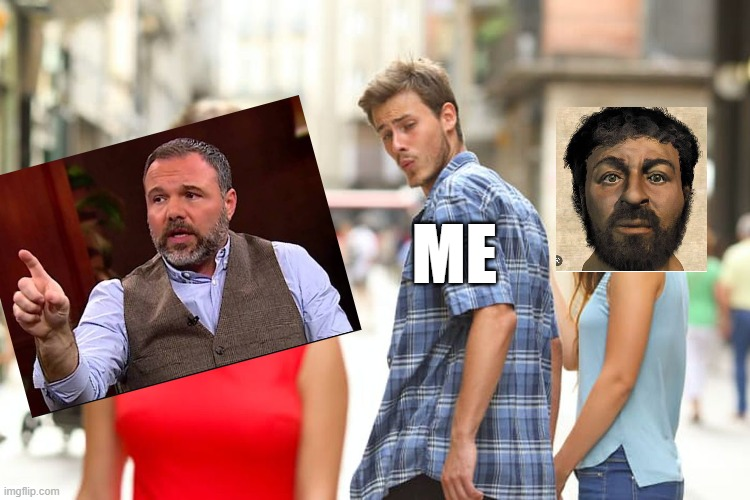
I look back on my words and feel naivete and shame. I look back on my experiences, where I led a bible study and quoted this man to such great lengths that my life was basically the Distracted Boyfriend meme. Mostly, I look back on my devotion to this man and I am confronted by the reality that what I loved so much about this person was completely fabricated and curated by his personal Media team, with hundreds of thousands of dollars behind them. I didn’t really know Driscoll at all. And, for the people who did know him, who were railroaded by him, I played a small part in their demise at his hands.


A lot of the podcast deals with the issue of culpability. And I think Mike Cosper asks the appropriate questions. He suggests, in no uncertain terms, that we all had a role in Driscoll’s rise to prominence, and that, worse, we drank the Kool-Aid willingly. I vividly recall defending Driscoll during discussions. Granted, it was mostly his "Reformed theology," but I still came to the defense of someone that, behind the scenes, was disqualifying himself from ministry. And that, in no uncertain terms, kind of fucks with me.

When I was recommended the podcast, it was following a period of spiritual upheaval in my life. That others who had since left the Church, could come to this podcast and feel a sense of reconciliation with whatever spiritual abuse they had previously encountered, was a balm unto my soul. Although, in truth, that feeling came and went rather quickly. What galls me, what I don’t understand, what I may never understand, is that Driscoll is still a pastor. For me, that’s difficult to accept. I struggle with the idea that God would allow someone like Driscoll to continue, unabated, in sin. If his Twitter feed is any indication, his aspect is unchanged. He is still the William Wallace II character of the early Mars Hill Message boards, only now he is lauded and accepted by every fearful boomer tuning in to Fox News, if only because he isn’t “woke.”

Simultaneously, however, I am reminded that Driscoll isn’t the first man to “speak for God” and kindle a movement, despite grievous disqualifications. If history tells us anything, there have been many “Mark Driscolls” in the past, who’s cunning and wit transformed and mobilized entire movements of theological thought. I may even meet him in heaven and behold his redeemed aspect, shed of all his faults and misdeeds, by the grace of Jesus, and finally shake his hand without shame… But, until then, I am oddly confronted by my own self-serving righteousness, and my desire to see him punished, despite knowing the truth: Mark Driscoll was justified by Christ’s death, burial, and resurrection. Who am I to want justice and retribution, while at the same time holding back my forgiveness? Even Mark Driscoll deserves forgiveness. Why? Because Christ forgave me.

If none of this makes sense to you, then I welcome you to the personal hell I find myself in. But if it does, then pray for me, and for Mark, in hopes that we can both meet and embrace one another, one day, without pretense.


Saturday, January 21, 2023

Adventures in Church Shopping


This week I decided to leave the church.

Not THE church, just A church.

Calm down guys…

We started going to a new church a couple weeks ago, having decided to stop going to the one that we had been going to for a year. The previous church was good; nothing wrong with it, whatsoever. Doctrine and theology was solid. It’s mission was solid. But after a year of going, we still knew no one.

To clarify, when we were in Santa Barbara, we would go to Reality Santa Barbara. I was involved in Children’s ministry. And there was even a mid-week gathering focused on building community with the team. The group was strong. It persisted and it grew and I met and knew so many wonderful people while we went to it. But at the first church we went to, after moving to the Santa Ynez valley, I felt like I had been invisible. I was helping with the kids ministry, and I knew a few people. But I just felt like another cog in the wheel at the end of the day. Most of the church was older. Most of the cliques had been formed. We were just bouncing around, like a ball in a broken pachinko machine.

The new church (that we decided to leave recently), was also good (theology, worship, preaching, etc), only it was in a process of rebranding. The vision the pastor had was to structure the church off of a discipleship program steeped in reformed theology. We watched a video by Douglas Wilson, a conservative, reformed pastor, that spoke of a time of reformation in our own culture. His premise (one that I disagreed with) was that the Sexual Revolution had destroyed the Nuclear Family (already not biblical in its literal sense), that our course was changed irrevocably. The only recourse was to implement a structured, biblical life, where church fellowship and worship was held in the highest esteem. (All of these things aren’t bad, by the way.) But all the propaganda reels of “sinister” LGBTQ and Black Lives Matter rallies turned me off. It turned me off, not because I don’t believe what the bible tells me (that gender and sexuality are created aspects of our identity, established by God), but because the imagery employed was not meant to call people to repentance, it was meant to create an object to vilify and to hate. This serves no purpose. It’s a lazy way to galvanize people by pitting them against the very people we are meant to minister to… Not only this, but my days as a follower of Mark Driscoll’s teachings still linger in my memory. (There was a time when I was radicalized by the Reformed Church in my 20s.) And I have no interest in going back to that theological framework.

I don’t believe that there is a “best way” to worship. Orthopraxy does not equate to orthodoxy. Everyone has the ability, and calling, to invest in a community that serves the “Orphans and the Widows” that live among us, but I don’t believe the Bible calls us to seclude ourselves from the world. When Jesus ran his ministry, he critiqued the religious elites for their orthopraxy and (seemingly) spent the rest of his time with the spiritually sick and destitute. All the people that we do not desire, or make time for, he loved AND died for. Far be it from us (THE Church) to shirk that responsibility.

I guess what makes me so depressed by this turn of events is not that I was wronged or had been ill treated by this new church. If anything, the pastor was gracious and kind. He remembered my name, and even approached me on our first Sunday visiting. What makes me so depressed, is that, either intentionally or unintentionally, the church’s identity shifted from its Sunday persona to something completely different on the mid-week gathering. It was a classic bait-and-switch.

Yes, that may sound petty. But the lack of consistency was a red flag. It reminded me of a darker time. A time when I had been hurt, and jerked around. And I wasn’t going to do that again. The most important thing about being in community is about being in sync with the pastor’s vision for the community. This time, though, it just wasn’t happening. And that sucks.

 Anyways… time to go looking for another church then.

Two down, one to go.  


Saturday, December 24, 2022

Merry Christmas! Updates Abound!

So, what have I been up to?

 I have been vacillating back and fourth about what to do about my videos. I had a production method locked in, but when Instagram changed their platform a while back, I never took the time to find a new platform. So now I have this 600$ camera and nothing to film. (Truthfully, I have things to film, but I don't know what I should be focusing on.) To this day, my most popular video was a review I did of Mister Miracle by Tom King and Mitch Gerads. It was a part of a series called, "What the Heck am I Reading?!" which I occasionally harken back to in Instagram posts. This past week it was some clippings of Static, a comic that ran in the 90s that introduced the character Static (of which I remember fondly from the DC Comics animated series, Static Shock). The issue in particular referenced the tension between the Jewish and Black communities in the 90s, which seems all too relevant today with the resurgence of anti-semitism in the mainstream media ecosystem. Reading something written, at this point, almost 30 years ago, as if I pulled it from the culture section of the LA Times today, is as wild as it is bizarre.

Working with my designer Greg, on his publishing label Electi Studio has yielded some amazing fruit. I may be able to get involved more closely with one of his new properties, which already has large base of players! This reduces the amount of work incumbent on me to self promote. Doing that has always been exhausting and something that I struggle with, so the opportunity to just write without needing to worry about  managing a social media presence is a really big deal to me. 

The short story anthology that I am writing to endcap the Dynamic Synapse Protocol universe was put on hold to help Greg with the above since June of this year, but since the beginning of November I've been back at it again. I've re-read about 2/3rds of Dynamic Synapse Protocol to help find some narrative beats to reference back to in the anthology. Of course, I've found a few mistakes that made it to print, but thankfully nothing too major. (Most books have some typos still when they go to print. You know, because pobody's nerfect!) 

The most impressive thing about revisiting a book, or really anything that we have written after some time, is that the work is mostly unfamiliar. Too much time has passed, so all the intimate details just fade away. The result is that we get to read something with (nearly) virgin eyes, and it's a strange experience. 

 What have I been listening to?


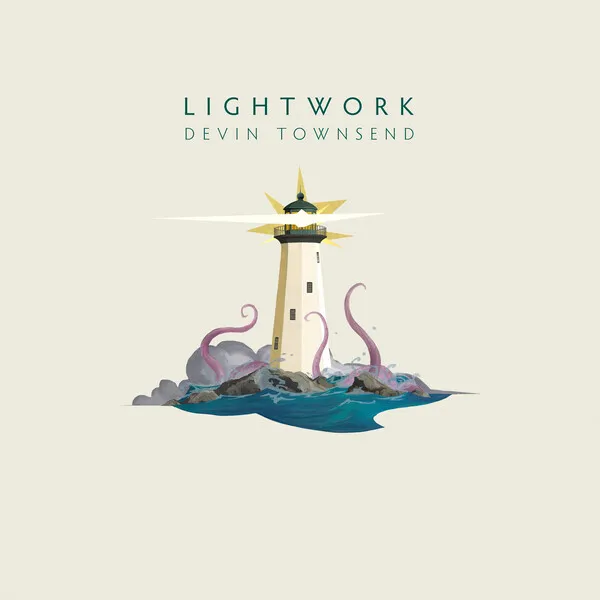
Over the Thanksgiving weekend I listened to Devin Townsend's new album called Lightwork. I loved the conceit of a metal guy embracing the Seattle-esque indie textures of post rock. It was authentic, of course. The single off the album "Call of the Void" was definitely the best track. Something to listen to while allowing my mind to drift away into a fugue as my wife drove us home. 


What have I been watching?


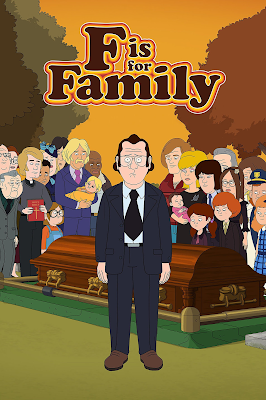
F is For Family has dominated my evenings. After Alyssa puts Eowyn to bed we are mostly watching this, which is (I can only assume) a semi-autobiographical retelling of Bill Burr's childhood. The ebb and flow of comedy and tragedy and turmoil and all that plagues Burr's fictional family, is wildly engaging. It's also set in the 70s, which allows the writers to explore some of the period instances of misogyny and racism. Strangely, what the kids get up to in the episodes, isn't too different from what I lived through during the 90s. I don't know if that is a good or a bad thing...

I found a new church!

It's called Crossroads and pastored by Pastor Sam Kiser. So far so good. I appreciate their humble approach to service and a good ministry to the local community. I am eager to get involved and see what God will be doing with them in the years to come.


Merry Christmas and Happy New Year

Anyways, I hope you all enjoy your Christmas holiday. Here's to a great new year! See my picture from this year's holiday party. You can't see it, but I was morbidly nauseous the whole night! (Thanks anxiety!)


Monday, October 31, 2022

Cinephobia - By Stuart Warren

Happy Halloween, Friends!

I wanted to get into the spirit this year, so enjoy a spooky short I wrote just for today! 


Trevor checked Rotten Tomatoes between calls at the office, glancing at the group chat in his periphery. It was ritualistic and ingrained in his routine, like checking social media for Likes or watching Late Night hosts recap yesterday’s news when he woke. An action movie was top billing on the site currently, canvassing every inch of the display with promotional interviews and thumbnails. The film, Equinox Protocol, was polling an anemic 38%.

There were many films Trevor could have seen, many books he could have read, his schedule never accommodating or flexible enough for either these days. As a child, he had plenty of time to watch movies at his father’s country house, in part because he was alone, with no friends to play with for miles. His father’s encompassing collection of film and television swaddled him in the warmth of companionship, and that was fine.

Trevor scrolled down the page. On the list of critical releases, The Haunting at Haight and Ashbury was number one, with a proud score of 92%. Critics raved that “its use of supernatural horror to emulate the fears of marginalized communities in gentrified urban areas was, bar none, the best use of the genre in decades.” It was an art film, celebrated at Cannes and lauded with a standing ovation lasting over twenty-eight minutes. Trevor frowned, as if excluded and oppressed, clicking through pictures of the cast and crew basking in waves of adulation, knowing that he would never be able to see the film. 

It was simple. 

He couldn’t watch horror films. 

They terrified him. 

Later that day, Trevor clocked out of work, leaving the office in the rearview mirror, and drove the long road home along PCH, all the way from Santa Monica to his ho-hum townhome in Oxnard. He thumped to the beat of his music at first, listened to true crime podcasts, then put on some music again, bleeding out the tedium in short bursts.
 
At home, Trevor made some canned soup and slumped down into his couch, scrolling through social media as the TV played reruns, unattended.

There were other horror movies that he had seen in his life, although most of them unwillingly. The fear they evoked was unsettling, despite knowing full well that ghosts and poltergeists were works of fiction. Yet something about them seemed more real than they appeared to be. He was religious, yes. And he did accommodate for the possibility of demons and angels walking amongst the living—alongside more acceptable things like God. He even considered the possibility that certain dreams he experienced in his youth were prognostications of his own belief in God coming to the fore, when demons tormented him in waking dreams. 

But ghosts? No chance. Not even a little bit. 

At 10:30 PM, Trevor turned off the TV, rolled off the couch, and walked to bed. 

Lying still, he pulled up Wikipedia on his phone and searched for the article on The Haunting at Haight and Ashbury, swiping down the page, reading the synopsis with rapt attention. Apparently, the story was an anthology, in four parts, each woven together by a larger narrative.

Part one centered on a lesbian florist, Summer Gaines, in the early ’70s, who is tormented by the ghosts of Chinese laborers, whom her ancestors had contracted to build her family’s home but then, of course, refused to compensate. When they complained and threatened to go to the authorities, her great-great-grandfather had them killed, hiding their bodies in the masonry. Their hands, faces, and twisted forms, now a part of the house, take their vengeance on the florist. The finale includes the spirits interring her in the walls of the very house that entombed them, with no one to mourn her or place flowers on her grave. 

Part two, taking place in the late ’80s, is about a land developer, Patrick Martini, who buys the block of Masonic and Haight to turn it in to an open market. All the tenants are happy to sell, despite their appearance of being against it, and all succumb to the allure of wealth, except Esther, an aging Haitian woman who is accidentally killed by the thugs the man hires to harass and push her out of her home. The open market is built and brings prosperity to the aging district during the mid-’90s, except for the developer who is tormented by the zombie of Esther, raised by her estranged daughter, Zelda—who briefly dated Summer in the late ’60s. 

Trevor swiped downward, feeling the chill of the room on his neck.

Part three, he reads, is about a landlord, Dominic Anselmo. In the fall of 2004, he raises the rent of a tenement—on the block of Ashbury and Waller—to capitalize on the recent gentrification of his already exclusive neighborhood. A single mother named Helen, with a sick child, is evicted from her impoverished apartment in the dead of winter and succumbs to hypothermia in the freezing rain. The child miraculously survives and is adopted by a gay couple, George and Hank Rafferty, in 2008. However, when they move into the newly refurbished apartments, they notice things compulsively misplaced, like a dish towel or a colander. Both the couple and the landlord, who are mutual friends, are tormented and stalked by the poltergeist of the woman, who wants her baby and home returned to her.
A creak in the walls halted Trevor from reading the final description.

In the darkness of his room, Trevor leaned over to turn on the light at his bedside and thrust his billowy comforter over his head. He knew that ghosts weren’t real, that supernatural entities were the extant components of psychosis. Yet he could feel them in his room, the characters, made as real as the films he refused to see. A bedroom overcrowded with ghouls and killers, spirits and demons, abstracted from synopsis and recounted by film critics. Trevor tried to go to sleep and prayed for better dreams as the noise machine in his room faltered and skipped.